
Sound
Sound
The importance of sound in an audiovisual production is often underestimated. However, it is the background sound that drives the viewer's emotions and gives the video an emotional dimension. A video without background music or with sound issues is like an image without color, if not worse.
Managing the sound in this project presented a double constraint. First, a technical problem, as I did not have a proper recording kit, which affected the sound quality of the first productions. I used a simple headset I had owned for years; I recorded by putting my head in a cardboard box to amplify my voice with resonance while maintaining a deep tone, and I spent a lot of time on sound editing software cleaning up the recorded sound… in short, it was a nightmare. That was until I met Maureen Conner Tenore from the United States, who was impressed by my work and supported me financially.
Maureen sent me from the U.S. a high-quality recording kit (microphone and sound card), a RAM unit, a 1-terabyte hard drive, a very powerful graphics card, an 8 GB USB flash drive, and even a camera and a color laser printer to print the thesis text, among many other things. She was practically the only one to finance and encourage the project.
The second major challenge was choosing the background musical atmosphere. This task might seem easy, but it poses a significant problem. I had to sift through about 50,000 tracks from various categories: movie soundtracks, video games, commercials, software backgrounds, music albums… The choice depended on the quality of the music and the feeling the video needed to generate. For example, for the video on CSF (Cerebrospinal Fluid), an "aqua" type track (liquid atmosphere) was needed, as it describes a fluid. For nerve impulses, a more distorted electronic rhythm was chosen.
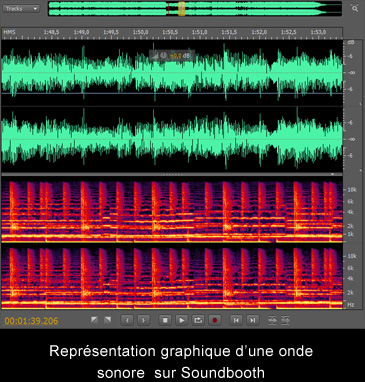
After the sound recording, I process it in Soundbooth to purify the sound, add quality effects, and perform sound editing. Sometimes I also use Adobe Audition for more elaborate effects (such as the Multiband Compressor - Broadcast, for example).
I save the final sound wave in WAV format to later import it into the video editing platform: After Effects or Premiere Pro.